

JOIN OUR NEWSLETTER

“CHARMED City” / Hopkins Bloomberg Public Health Magazine
The Johns Hopkins Bloomberg School of Public Health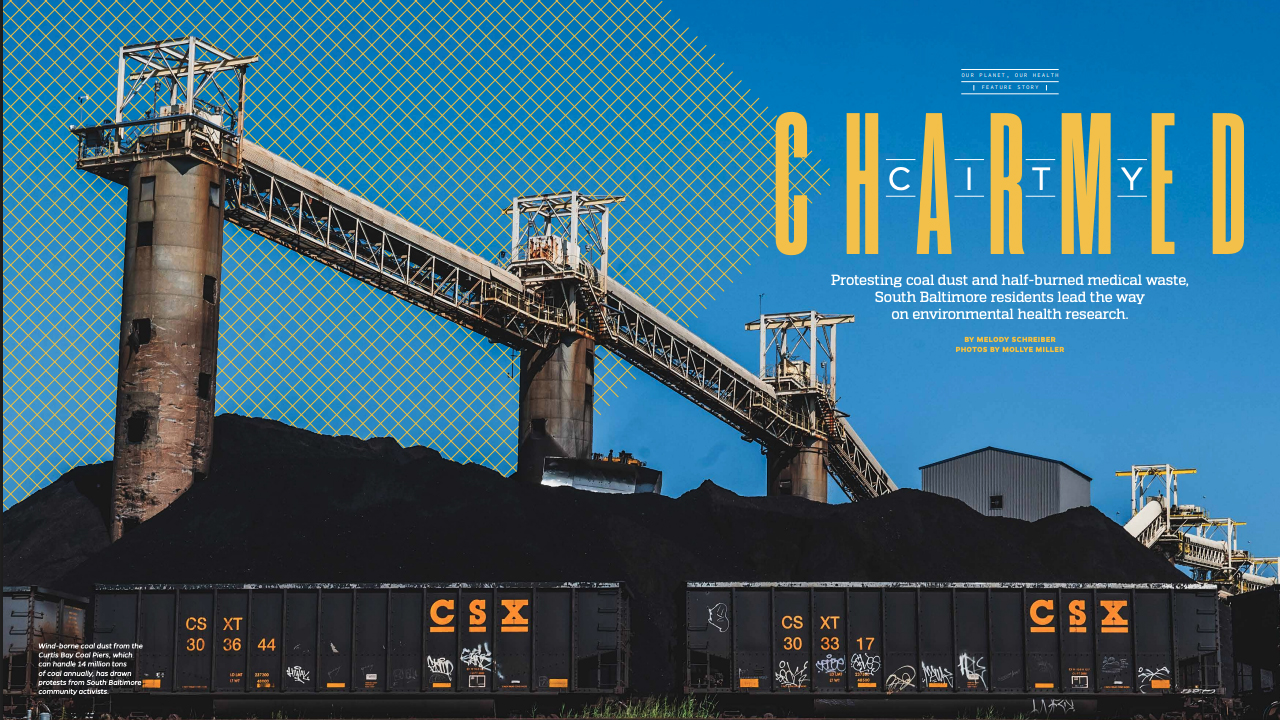
About This Project
Summary
In the South Baltimore neighborhood of Curtis Bay, black dust plasters windows and slips into homes when doors swing open. Community residents knew the dust came from piles of coal at a CSX terminal, but CSX denied this. Curtis Bay residents knew they needed science to back up their claim and effect change. This is the story of how the community partnered with Johns Hopkins scientists to prove that the dust was indeed coal—and then to advocate for policy changes to protect their health.
Goals & Objectives
We aimed to show the power of community and university collaborations to influence policies that improve health and to showcase an example, not just of a community-led effort to address pollution, but of how public health works best: in partnership with the people affected.
Results & Impact
We shared the special issue with 28K print readers, 68K email readers, nearly 1 million social media followers, and 90K+ newsletter readers to raise awareness of an environmental threat in our school’s home city—and to demonstrate the power of community-university partnerships to make real change.
JOIN THE NEWSLETTER