Melissa Doman on Building Healthier Workplaces From the Top Down
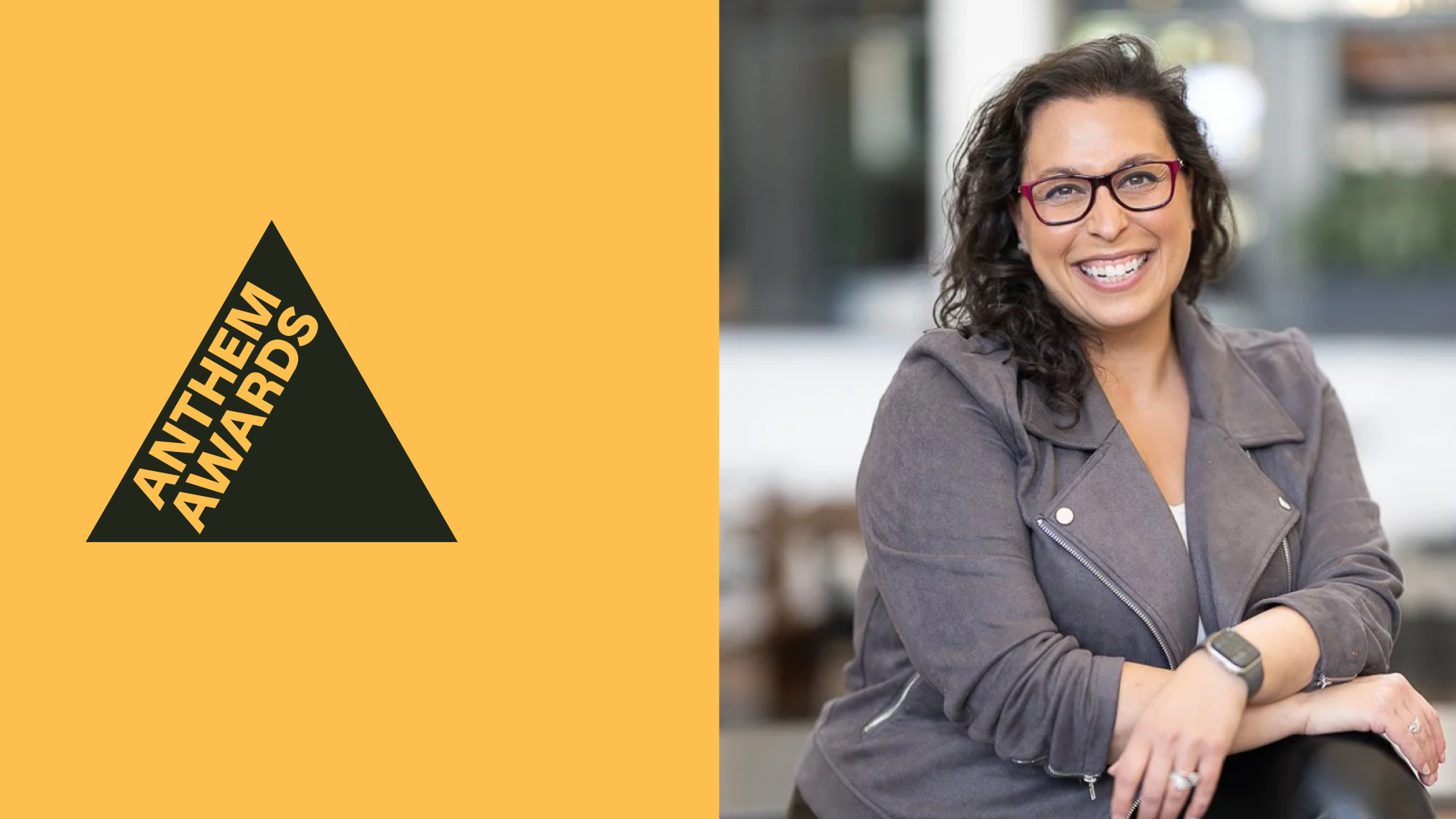
Creating healthier workplaces requires more than offering resources. It means examining the cultures, expectations, and systems that shape whether people actually feel able to use them, including the people responsible for leading.
Melissa Doman, MA, former mental health therapist, author, and Founder of The Workplace Mental Health Method™, has dedicated her work to helping organizations have more constructive conversations about mental health, team dynamics, and communication at work. She works with companies around the world, including Google, Progressive, Dow Jones, Orlando City Soccer Club, Microsoft, Salesforce, Siemens, Estée Lauder, and Janssen, and has been featured as a subject matter expert in CNN, Vogue, NPR, Fast Company, the BBC, CNBC, and Inc.
As a member of The International Academy of Digital Arts & Sciences, Melissa brings that perspective to recognizing work creating meaningful change in health and the workplace.
Her newest book, Cornered Office: Why We Need to Talk About Leadership Mental Health, turns attention to an often overlooked part of workplace mental health: the well-being of leaders themselves. We spoke with Melissa about the systems and expectations that make it difficult for leaders to acknowledge their own mental health, the role organizations have in changing them, and what healthier leadership can look like.
Why is it particularly challenging for leaders to talk about their own mental health in the workplace, and why is it important that they do?
History has taught leaders that they’re supposed to be symbols of stability, not humans with limits. It’s taught them to be emotionally impenetrable, and that anything else makes them weak, or not credible, or unable to do the job. None of that is based in fact.
If we’re honest, talking about mental health is actively discouraged for leaders in certain ways. In the last few years, as mental health awareness has become more important in the workplace, leaders are almost always expected to be the arbiters of those programs, not the recipients. They’re supposed to be role models and sponsors, to humanize themselves so other people feel comfortable talking about their own mental health. But when leaders actually start talking about their own struggles, people seem incapable of viewing them as one body that houses both success and struggle. I find that ironic, because employees ask to be viewed that way, and leaders and employees are the same species.
It’s a lot of fuel coming from the sociological assignment of power and the psychological biases in how we, as social creatures, view leaders and what we expect them to be. When they break that image with reality, people get frightened, or judgmental, pick your poison.
I don’t understand, in 2026, with everything on leaders’ plates, in the middle of cancel culture, working at breakneck speed, managing their teams’ mental health on top of their own, how managing emotional health isn’t a core part of leadership development. I genuinely can’t conceive of it. That’s why I rage-wrote 75,000 words about it.
You talk about the compounding challenges that come with leadership. Can you walk us through some of these factors?
I call it the Weight on Leadership Mental Health Equation. It’s not a sexy name, I know. Over about five chapters, I go through all the different elements that make up that weight. Read individually, people identify with them: “Yes, I struggle with this, it sucks.” But when you see them all added up at the end of chapter five, it’s overwhelming.
A few of them: the influence of toxic historical narratives, where “good leadership” runs counter to any display of emotional struggle. Magical thinking and the dehumanization of leaders. A lack of social permission to speak up. Experiencing institutional betrayal. Having to choose between emotional survival and career progression. Creating an unintentional negative impact on team culture around mental health. It’s quite a long equation, and the list keeps going.
Isn’t it a hard sell to ask people to sympathize with leaders when the position already comes with real advantages?
Multiple things can be true at the same time. There are real perks that come with being in a leadership position that aren’t available to individual contributors. That’s the first part. The second part is: why can’t there be acknowledgment of the toll that comes with that position too? A higher salary or more perceived freedom doesn’t erase the toll. Both exist at once.
Human beings don’t like that, because we love to sort things into boxes, what’s called a mental heuristic, a fancy word for a shortcut. So people ask, why give leaders a pass? This comes with the job? It’s not about a pass for stress, and definitely not a pass for bad behavior. It’s just acknowledgment of the stress that comes with the role. And if we want more leaders doing good than harm, wouldn’t it make sense to build systems that help them cope emotionally, so they can lead effectively and sustainably? Sometimes it feels like I’m screaming into a crowded room and no one hears me. I’m not even looking for sympathy, just logical acknowledgment.
Is this really an organization’s problem to solve, and could having leaders open up in front of their peers do more harm than good?
Is this the organization’s responsibility? Partially. The other part is individual responsibility. In certain countries, there’s something called organizational Duty of Care. It’s literally law in the UK, and exists under different names in Canada and Australia, where organizations are responsible not just for employees’ physical safety, but their emotional well-being too. Leaders are part of the workforce.
That doesn’t mean solving leaders’ mental health issues for them. It means acknowledging that managing emotional health is part of healthy leadership, and providing the systems and resources for leaders to use. Concretely: overtly encourage people at every level, up to the highest levels of leadership, to actually use available mental health resources. As a former EAP counselor, I could count on my hands and toes how many leaders called our hotline in a year, because they saw those resources as something they refer their teams to, not something for themselves.
Build peer support networks, formal or informal, so leaders can at least talk to each other about the emotional realities of the role, even if they’re not ready to talk to their teams. And make sure managing emotional and cognitive functioning is built into leadership development: sustainable stress management, emotional intelligence, discomfort tolerance, navigating uncertainty. These should be standard parts of ongoing leadership programs. And it’s not just puppies and rainbows, there’s study after study showing this affects the bottom line. Even if you want to be a soulless, ardent capitalist about it: leaders who can lead without bullying their teams positively contribute to results. The data is there. Ignoring it is just choosing to be behind the curve.
If you’re a leader, how should you think about approaching your own mental health, and how is that different from mental health in general?
Power dynamics are real, and they don’t disappear just because I say emotional health matters. When deciding how to humanize yourself as a leader, you have to factor in your organization and its culture. If you’re going to talk about stressors, it has to come with what you’re doing to manage them.
Build a fence. Not an ironclad door, and not an open field, a fence. Decide what you let through and what you keep out. You don’t have to share a diagnosed condition, though there’s nothing to be ashamed of, and it’s protected under the ADA in the US. You don’t need to overwhelm people with details either, that can go sideways fast when you’re in a position of power.
But there’s a responsibility that comes with any behavior change: telling the people it may affect, so they don’t assume it’s about them. It might just be: “I’ve been feeling kind of high-strung lately, so I’m trying to get out running or hiking more. If I seem tightly wound, it has nothing to do with you.” Simple, logical, and clear about what you want people to do with the information.
For actually managing the toll, I recommend two things. Brené Brown talked about communicating capacity with her husband on a numeric scale, no romantic relationship required to use it. A hundred percent means operating on all cylinders, zero means basically comatose, and at each level you name what you’re feeling, what has to get done regardless, what can wait, the support you need, and why you’re not going to punish where you’re at. This works better in some industries, companies, and teams than others, so read your environment. If a workplace makes clear this conversation won’t land, don’t be a hero, listen to what they’re telling you. But where it works, you might tell your team: “I’m at about 50% capacity today. Here’s what’s an absolute five-alarm fire, and if something isn’t truly urgent, I’d appreciate it waiting until tomorrow.” You’re allowed to draw boundaries. It helps the team adjust their expectations, and it puts the leader in a better position to actually deal with what they’re dealing with.
The last thing I’ll mention is what I call the Mental Well-being Non-Negotiables™, a concept I trademarked years ago because I was sick of the wellness industry pushing generic advice built for scalability and profit, not actual people. You have to find what genuinely works for you, not what you’re told should work, and do it on a set cadence, like any other habit.
__________________________________________________________________________________________
Set the New Standard for Good: Enter the Anthem Awards
If you’re creating meaningful work in Health, enter it in the 6th Annual Anthem Awards. With Industry Specific categories including Mental & Behavioral Health, Healthcare Access & Equity, Healthcare Workforce & Wellbeing, Public Health, and Health Education & Patient Empowerment, there are now even more ways to have your impact recognized. Submit your work by the Extended Entry Deadline on September 18, 2026.